
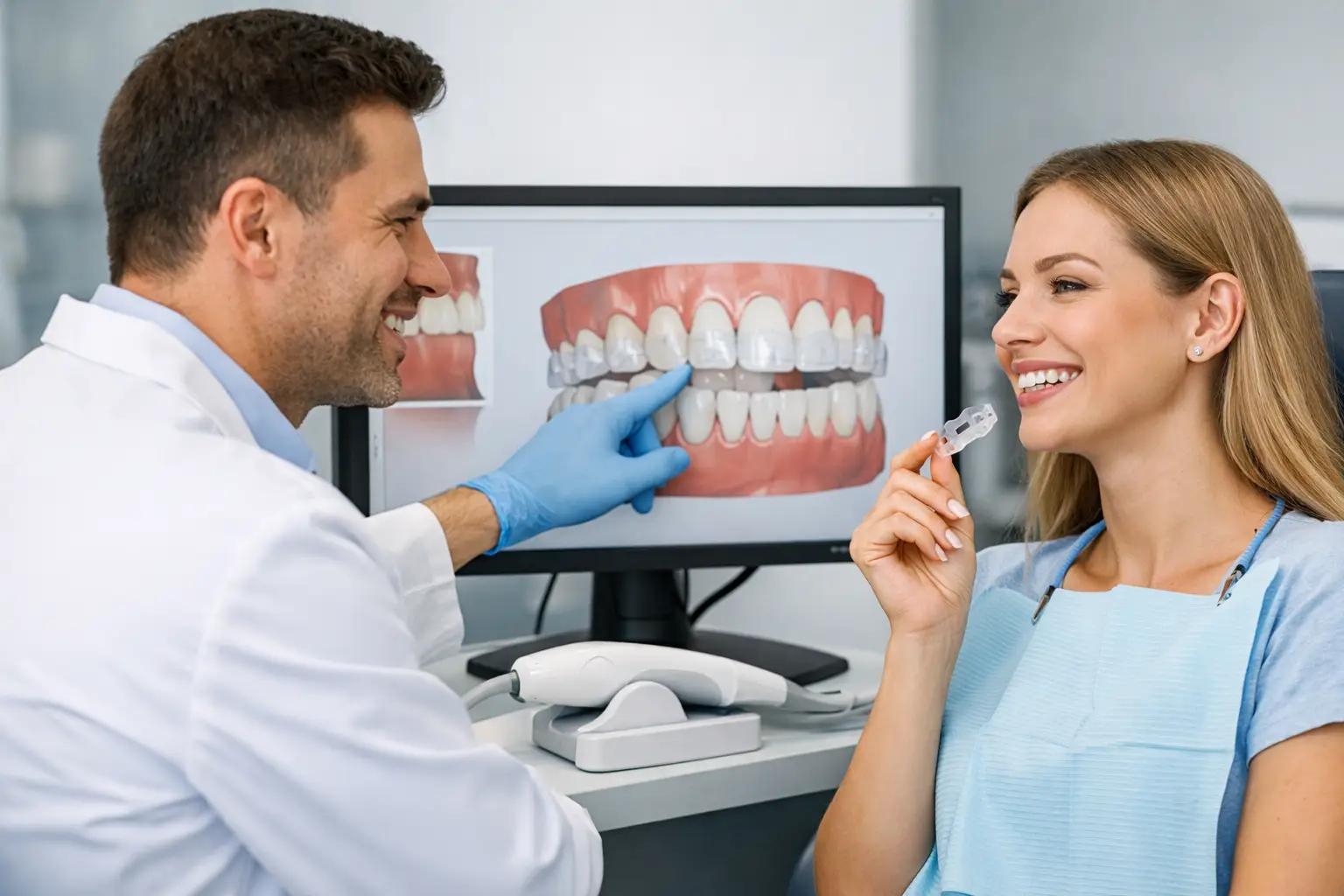
A mirror can tell you your smile is changing. A digital scan can show exactly how, where, and why.
That is the real value of digital scan orthodontic progress. Instead of relying on guesswork, memory, or side-by-side photos that miss subtle changes, scan-based tracking creates a precise visual record of how teeth, arches, and bite relationships are evolving over time. For patients choosing a modern orthodontic path, that level of clarity changes the experience.
Orthodontic treatment has always been about movement. What has changed is the ability to measure that movement with far greater precision. For adults and teens who want discreet treatment, more confidence in the process, and a clearer view of their results, digital monitoring is no longer a nice extra. It is becoming part of what defines premium care.
What digital scan orthodontic progress really means
At its simplest, digital scan orthodontic progress is the use of repeated intraoral scans to track changes throughout treatment. A clinician captures a detailed 3D model of the teeth and surrounding structures at different stages, then compares those records over time.
What makes this powerful is not just the scan itself. It is the ability to superimpose one scan over another and evaluate movement objectively. Instead of saying, “your teeth look straighter,” a provider can assess how individual teeth have shifted, how the arch form has changed, and whether treatment is progressing in line with the intended plan.
For patients, this creates a more transparent experience. You are not left wondering whether enough is happening or whether treatment is on schedule. You can actually see the progression.
Why visual tracking matters more than most patients realize
Orthodontics is often judged by the final smile, but the journey matters. Small deviations during treatment can affect timing, comfort, and long-term stability. A system that tracks progress digitally can help identify those changes earlier.
That matters for appearance-conscious patients who want efficient improvement, but it matters just as much for function. Teeth do not exist in isolation. The way they align influences how the bite fits, how forces are distributed, and how comfortably the jaw functions.
This is where digital progress tracking becomes more than a cosmetic tool. It supports more informed decisions throughout treatment. If tooth movement is happening as planned, that is reassuring. If something is lagging or shifting off course, adjustments can be made before the gap between the plan and the outcome grows larger.
Digital scans vs traditional progress checks
Traditional orthodontic reviews still have value. A skilled clinician can assess fit, mobility, contact points, and bite changes in person. But traditional checks are often limited by what the eye can see in the moment.
Photos can help, yet they flatten a 3D process into a 2D image. Impressions can capture shape, but they are less comfortable, less efficient, and less convenient for repeated monitoring. Memory also plays a bigger role than many patients realize. Even when providers document carefully, it is harder to appreciate fine changes without layered digital comparison.
A digital workflow improves that visibility. Scans are faster, cleaner, and easier to repeat. More importantly, they create measurable records. That gives both the patient and the clinician a stronger foundation for evaluating progress.
There is a trade-off, of course. Better tracking depends on high-quality scans, consistent protocols, and clinicians who know how to interpret the data well. Technology alone does not guarantee a better outcome. It improves the decision-making environment when it is part of an expert-led treatment system.
How digital scan orthodontic progress supports predictability
Patients often ask a version of the same question: how do I know my treatment is actually working the way it should?
Predictability in orthodontics comes from planning, biomechanics, compliance, and monitoring. Digital scan orthodontic progress strengthens the monitoring part in a meaningful way. It allows treatment to be checked against a digital baseline and, in advanced systems, against the intended movement pattern.
That can be especially valuable with clear aligners, where treatment success depends on a close relationship between the prescribed aligner sequence and the body’s real biological response. Teeth do not always move at the exact speed software predicts. Some respond quickly. Others need refinement. Some cases reveal bite changes that call for a more functional adjustment rather than a purely cosmetic one.
When progress is reviewed through digital superimposition, those differences are easier to spot. That gives the clinician more control over the next step, whether that means continuing as planned, refining aligners, adjusting staging, or incorporating additional functional support.
Beyond straight teeth: tracking the whole system
One of the biggest limitations in conventional orthodontic thinking is the tendency to focus only on alignment. Straight teeth matter, but a stable result also depends on how the bite functions and how the jaw relates to that bite.
A more advanced digital approach can track not just individual tooth movement, but changes in arch development and occlusal relationships over time. That creates a broader picture of progress. Patients who have concerns about bite imbalance, jaw comfort, or long-term stability benefit from this wider lens.
In a system like MYSS, digital scans are part of a more integrated treatment philosophy. Clear aligner therapy is paired with SyncSplint jaw synchronization and 3DDA scan-based tracking to follow changes with a level of precision that supports both esthetic and functional goals. That distinction matters. It means progress is not judged only by whether the front teeth look straighter, but by whether the overall system is moving toward a more balanced and stable result.
What patients can expect during scan-based progress reviews
For most patients, the scanning process is simple. A handheld intraoral scanner captures a 3D image of the teeth in minutes, without the mess of traditional impressions. The comfort advantage is obvious, especially for patients with a strong gag reflex or busy schedules.
The more meaningful part comes after the scan. When records are compared across appointments, progress becomes visible in a way that feels tangible. You may see where crowding has reduced, where rotations have improved, or how the bite is settling. That kind of feedback can increase confidence and motivation, particularly during treatment phases where day-to-day changes are hard to notice.
It also supports better conversations. Instead of a vague sense that things are moving forward, patients can have a clearer understanding of what is happening and what still needs attention.
Who benefits most from digital scan progress tracking
Nearly any orthodontic patient can benefit from better monitoring, but some groups tend to value it more.
Adults often appreciate the efficiency and accountability. They want to know that their time and investment are producing measurable results. Teens may respond well to visual proof that wearing aligners consistently is paying off. Patients with more complex bite concerns often benefit from the added precision because small changes can have bigger consequences for function and stability.
This approach also appeals to people who naturally expect a higher-tech healthcare experience. If you track your steps, your sleep, and your finances digitally, it makes sense to want the same level of visibility from orthodontic treatment.
The real advantage is confidence
There is a practical side to digital scanning – cleaner records, easier comparisons, better documentation. But the deeper benefit is confidence.
Confidence that treatment is being monitored closely. Confidence that subtle changes are not being missed. Confidence that your provider is not simply hoping the plan plays out, but actively verifying progress with objective data.
That does not mean every scan tells a perfect story. Orthodontic treatment still involves biology, adaptation, and the occasional need to change course. Yet when changes are needed, digital tracking helps make those decisions earlier and with more precision.
For patients seeking a discreet, modern, and more comprehensive orthodontic experience, that matters. A premium treatment journey should not leave you guessing. It should show you where you started, where you are now, and whether the path ahead still supports the smile and bite you actually want.
The best orthodontic technology does not replace clinical expertise. It makes that expertise more visible, more measurable, and more reassuring at every stage of treatment.
Comments are closed