
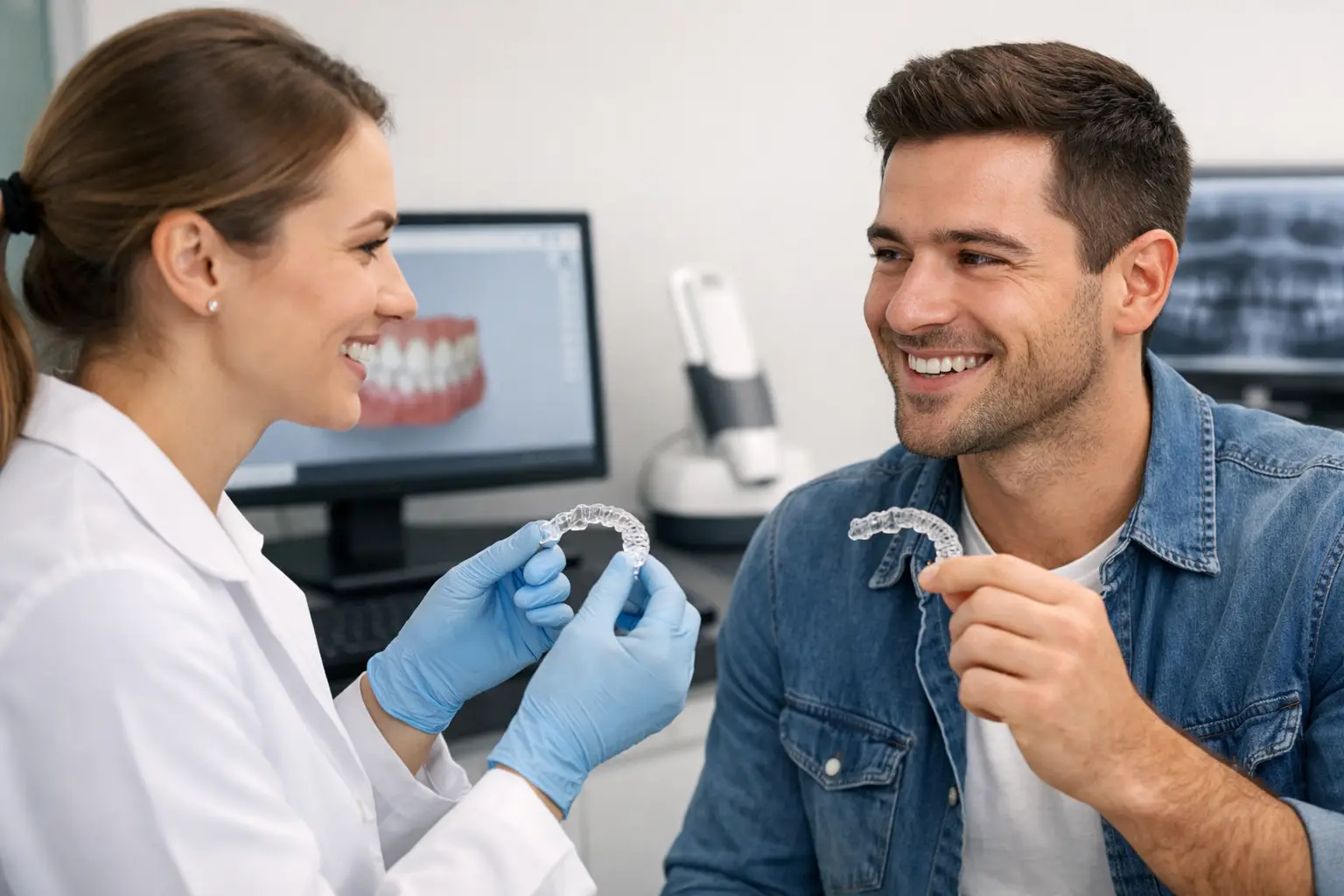
A straight smile used to depend on brackets, wires, and a lot of educated guesswork between appointments. What is digital orthodontics? It is a more precise, data-driven way to plan, deliver, and monitor treatment using digital scans, 3D modeling, advanced appliance design, and ongoing progress tracking.
For patients, that shift matters. Digital orthodontics does not just change how treatment looks. It changes how accurately tooth movement is planned, how clearly progress can be measured, and how comfortably treatment can fit into daily life. If you want a discreet solution with more visibility into your results, this is the new standard worth understanding.
What is digital orthodontics in simple terms?
Digital orthodontics is orthodontic treatment built around digital tools instead of traditional manual methods alone. Rather than relying on physical impressions, plaster models, and visual estimates, the process starts with intraoral scans that create a detailed 3D image of your teeth, bite, and arch form.
From there, orthodontists can map tooth movement stage by stage on a screen before treatment even begins. Appliances such as clear aligners are then designed from that digital plan. As treatment progresses, new scans can be compared over time to show exactly what has changed and whether the case is tracking as expected.
That sounds technical, but the patient experience is actually simpler. Fewer surprises. More clarity. A cleaner and more comfortable workflow from consultation to retention.
How digital orthodontics works
The process usually begins with a digital scan of the mouth. This replaces the messy traditional impression in many cases and captures the teeth with a high level of precision. The scan becomes the foundation for diagnosis and treatment design.
Next comes digital treatment planning. The orthodontist uses specialized software to evaluate tooth positions, bite relationships, spacing, crowding, and overall alignment. In more advanced systems, treatment planning may also consider jaw function and occlusal balance rather than focusing only on straightening visible teeth.
Once the plan is approved, the appliances are fabricated based on that digital setup. Clear aligners are the most widely recognized example, but digital workflows can also support retainers, splints, indirect bonding systems, and other custom devices.
Monitoring is where digital orthodontics becomes especially powerful. Instead of relying only on what can be seen during periodic office visits, progress can be assessed through repeated digital scans and superimposed 3D comparisons. That allows for more objective decisions when treatment needs refinement, acceleration, or retention support.
Why patients are choosing digital care over traditional braces alone
The biggest difference is predictability. With conventional treatment, planning often depends more heavily on physical models, manual adjustments, and intermittent observation. Skilled orthodontists have delivered excellent results this way for decades, but digital systems add a new level of control.
Patients can often preview expected tooth movement before treatment starts. That creates confidence because the process feels tangible, not abstract. You are not simply being told where your teeth may go. You are seeing a structured path built around measurable stages.
Comfort is another major reason. Digital scans are faster and easier than traditional impressions for many patients. Clear aligners are also more discreet than metal braces, which matters to adults in professional settings and teens who want a less visible option.
Then there is efficiency. A digital workflow can reduce delays, improve appliance fit, and help identify issues sooner. That does not mean every case becomes dramatically shorter. Some cases are still complex, and biology always matters. But when treatment is planned and monitored with better data, unnecessary detours become less likely.
Beyond straight teeth: the functional side of digital orthodontics
One of the biggest misconceptions is that digital orthodontics is mainly about aesthetics. It certainly supports a cleaner, more discreet cosmetic experience, but the real value often goes deeper. A modern digital system can help evaluate how the teeth, arches, bite, and jaw work together.
That matters because a beautiful smile is not the full story. If the bite is unstable or the jaw is not functioning in a balanced way, treatment may look good initially yet feel less comfortable or prove less stable over time. Digital planning gives orthodontists a better platform for addressing both appearance and function.
This is where advanced ecosystems stand apart from basic aligner treatment. Some systems integrate jaw guidance, bite coordination, and scan-based tracking into one treatment experience. MYSS, for example, combines clear aligners with SyncSplint jaw synchronization and 3DDA digital tracking to support both esthetic alignment and functional improvement.
That kind of integration reflects where orthodontics is heading. Not just straighter teeth, but a more complete approach to the stomatognathic system as a whole.
The key technologies behind digital orthodontics
Digital orthodontics is not one product. It is a connected workflow built from several technologies working together.
Intraoral scanning is the starting point. It captures a highly accurate 3D map of the mouth and eliminates many of the limitations of conventional impressions.
Treatment simulation software turns that scan into a dynamic plan. Orthodontists can evaluate movement sequences, staging, and projected outcomes before appliances are made.
CAD and 3D manufacturing make customization possible. Aligners, retainers, splints, and other devices can be produced with a level of consistency that supports more precise fit.
Digital monitoring adds another layer. Scan comparisons over time can reveal whether teeth and jaws are responding as planned. This is especially valuable in cases where precision matters, refinements may be needed, or long-term stability is a priority.
Cloud-based records complete the picture. They allow treatment data, progress records, and retention information to stay organized and accessible throughout the patient journey.
What digital orthodontics does well – and where it depends
Digital orthodontics excels in visualization, customization, and measurable progress. It is especially attractive for patients who want discreet treatment, modern convenience, and a clearer sense of control over the process.
It also improves communication. When patients can see scans, projected movement, and actual progress comparisons, they tend to understand their treatment better and stay more engaged with it.
That said, digital does not automatically mean better in every scenario. The quality of the result still depends on the orthodontist’s diagnosis, treatment philosophy, and ability to manage complex biomechanics. Software is a tool, not a substitute for expertise.
Case selection matters too. Some patients are ideal candidates for fully digital clear aligner workflows. Others may need hybrid approaches, additional appliances, or more direct intervention to reach a stable result. And while digital treatment can support efficiency, the body still moves at its own pace. Bone biology, compliance, and individual anatomy always influence timing.
Is digital orthodontics only for clear aligners?
No, but clear aligners are the most visible example. Digital orthodontics can support many forms of treatment, including retainers, bite splints, and digitally planned fixed appliances. The broader concept is about how treatment is designed and managed, not just what appliance is worn.
Still, clear aligners pair especially well with digital systems because they rely on step-by-step planning and custom fabrication. When that planning also includes bite analysis, jaw positioning, and scan-based monitoring, the treatment becomes far more sophisticated than simply moving teeth into a straighter line.
Who benefits most from digital orthodontics?
Adults often appreciate the combination of discretion, comfort, and efficiency. Professionals like the cleaner appearance of aligners and the fact that treatment feels more controlled and transparent.
Teens can benefit too, especially when they want a less visible alternative to braces and a modern treatment experience that feels easier to follow. Patients who care about long-term oral health, not just cosmetics, are also strong candidates because digital systems can support more comprehensive planning.
The ideal patient is not defined by age alone. It is someone who values precision, wants measurable progress, and prefers a treatment experience built around advanced technology rather than approximation.
The real promise of digital orthodontics
The best way to think about digital orthodontics is not as a gadget-driven upgrade. It is a clinical shift toward more precise diagnosis, more personalized appliance design, and more objective treatment tracking.
For patients, that means more than convenience. It means a better-informed path to a smile that looks refined, feels balanced, and is designed for stability over time. If you are considering orthodontic treatment, the most useful question is not whether digital is trendy. It is whether your treatment plan is built with enough precision to deliver the result you actually want.
Comments are closed